


Why Your Sunglasses Don’t Reduce Glare (and How to Fix It)
Glare is bright reflected light that makes it hard to see clearly and causes eye strain in sunlight. The best sunglasses reduce glare by filtering reflected light, improving contrast, and protecting your eyes from UV rays—making them ideal for driving, bright outdoor conditions, and all-day comfort.
If your eyes hurt in the sun—even when wearing sunglasses – you’re not imagining it.
And it’s not just brightness. It’s glare.

Why Do My Eyes Hurt in the Sun (Even with Sunglasses?)
Your eyes shouldn’t feel tired when you wear sunglasses.
If they do, it’s usually because:
- your sunglasses don’t reduce glare
- the lenses distort light
- your eyes are constantly trying to adjust
That’s why sunglasses can feel uncomfortable after a while.
Even if everything looks darker, your eyes are still working harder than they should.
What Is Glare in Sunglasses?
Glare is reflected sunlight that hits your eyes from multiple directions.
Instead of clear, controlled light,
you get scattered brightness that:
- reduces visibility
- washes out details
- creates eye strain
This is why glare makes driving and outdoor visibility harder.
Why Are My Sunglasses Uncomfortable to Wear?
If your sunglasses feel uncomfortable,
the issue is usually not the frame.-It’s the lens quality.
Low-quality sunglasses:
- don’t properly filter light
- allow glare to pass through
- force your eyes to constantly adjust
-Result:
- eye fatigue
- headaches
- difficulty focusing
– In simple terms:
your sunglasses are not reducing glare effectively.
How to Reduce Eye Strain from Sunlight
Reducing eye strain isn’t about wearing darker lenses.
It’s about choosing sunglasses that control light properly.
Here’s what actually works:
- Lenses that reduce glare (not just brightness)
- Clear, sharp vision across the lens
- Natural colors (no distortion)
- Comfortable vision after hours of wear
Learn how to choose the right pair in this guide on reducing eye fatigue and glare.
Best Sunglasses for Driving and Bright Light
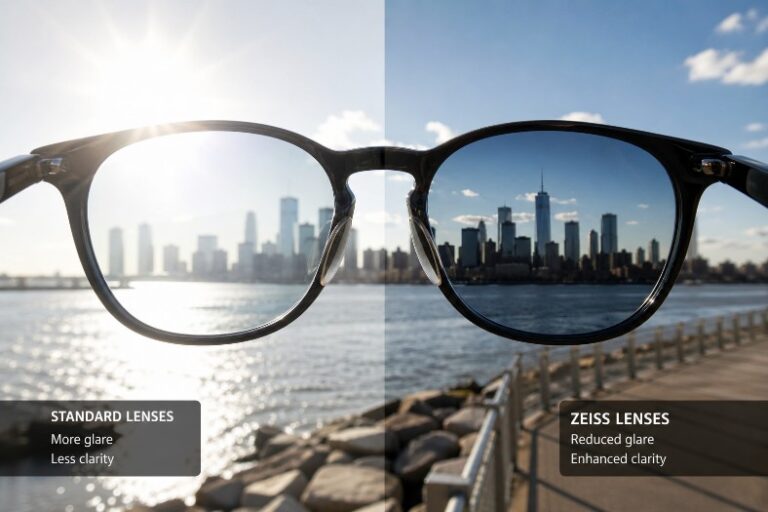
Why Most Sunglasses Don’t Reduce Glare
Most sunglasses are designed to:
- look good
- make everything darker
But that’s not enough.
Darkness does NOT equal glare reduction.
Many sunglasses:
- still allow reflected light
- don’t improve contrast
- don’t reduce eye strain
That’s why your eyes still feel tired
even when wearing them.
If your sunglasses still feel uncomfortable in bright light, explore our sunglasses collection designed to reduce glare and improve clarity.
How to Test If Sunglasses Reduce Glare (Before You Buy)
Most people never test sunglasses properly.
Here’s a simple way:
The Reflection Test
- Look at a reflective surface (road, glass, water)
- Put the sunglasses on
- Slightly tilt your head
Good lenses:
- reduce reflections
- make details clearer
Poor lenses:
- just make everything darker
The Comfort Test
Wear them in bright sunlight for a few minutes.
Ask:
- Do my eyes relax?
- Does the light feel softer?
- Can I see clearly without effort?
If not, they’re not reducing glare properly.
Do Lens Colors Help Reduce Glare?
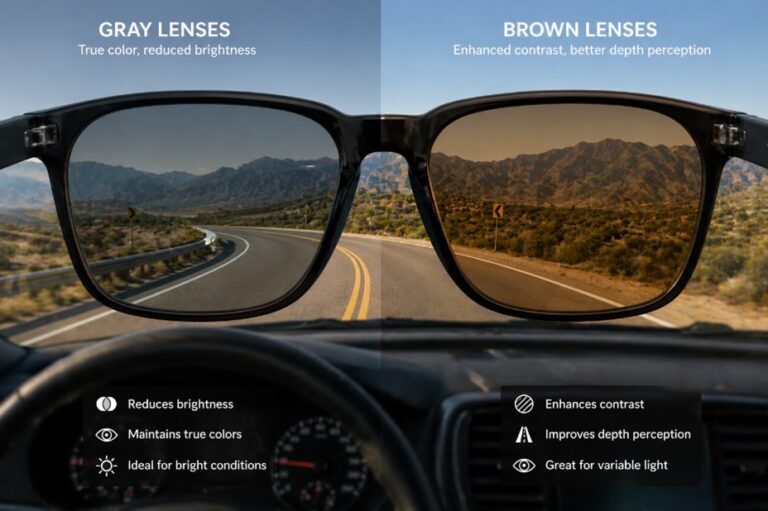
Yes — lens color affects how you experience light.
Best lens colors for reducing eye strain:
- Gray lenses → best for natural vision and everyday use
- Brown lenses → improve contrast and are ideal for driving
- Green lenses → balance clarity and glare reduction
Best Sunglasses for Driving and Bright Sunlight
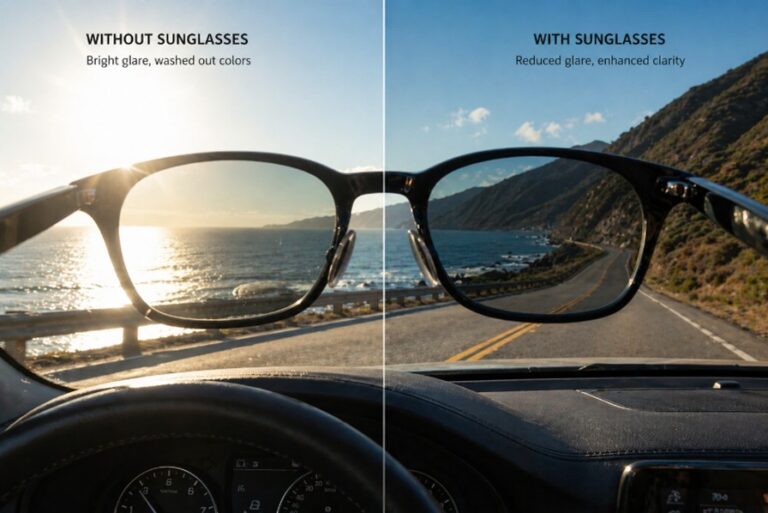
If you’re driving, glare reduction is essential.
The best sunglasses for driving:
- reduce road glare
- improve contrast
- keep colors natural
This helps you react faster and see clearly.
Still unsure? See what to look for in sunglasses for driving clarity and comfort
What Makes High-Quality Sunglasses Different
The real difference comes from:
- lens precision
- how light is filtered
- long-term visual comfort
This is where premium lenses like ZEISS stand out.
The Difference You Can Feel
Without proper lenses:
- you squint
- your eyes get tired
- vision feels flat
With high-quality lenses:
- vision feels sharp
- light feels controlled
- your eyes stay relaxed
That’s the difference between wearing sunglasses…and forgetting you’re wearing them.
Why This Defines Real Quality
Most sunglasses change your look.
High-quality lenses change how you see and feel.
Final Thought
If your sunglasses don’t reduce glare,
they’re not doing their job.
Because real quality isn’t about darkness. It’s about clarity.
FAQs
Why don’t my sunglasses reduce glare?
Most sunglasses only darken your vision but don’t reduce glare. Without proper lens quality, reflected light still reaches your eyes and causes discomfort.
What causes glare in sunglasses?
Glare comes from light reflecting off flat surfaces like roads, water, or glass. This reflected light reduces contrast and makes it harder to see clearly.
Do polarized sunglasses reduce glare?
Yes, polarized lenses help reduce glare from reflective surfaces. However, lens clarity and overall quality also play a key role in visual comfort.
Why do my eyes feel tired even when wearing sunglasses?
Eye strain often comes from poor lens quality or distortion. Your eyes work harder to focus, which leads to fatigue.
What should I look for in sunglasses to reduce glare?
Look for lenses that provide:
- Clear, undistorted vision
- Glare reduction
- 100% UV protection