


Best Sunglasses for Driving: What Actually Matters
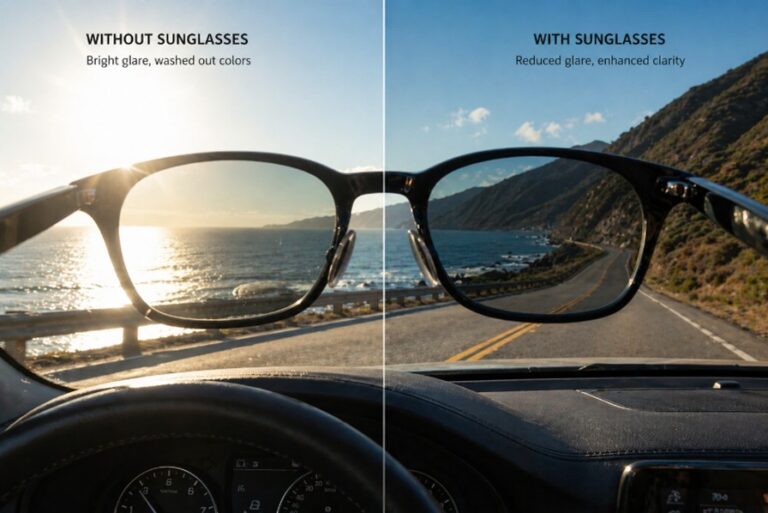
The best sunglasses for driving reduce glare, improve contrast, and keep your vision clear in bright conditions.
If you’ve ever driven into the sun, you know the feeling.
The road gets too bright.
Reflections hit your eyes.
And your vision starts to feel unstable.
That’s not just sunlight — it’s glare affecting how you see.
Most sunglasses make driving harder — not easier.
Glare, poor contrast, and low-quality lenses can reduce visibility and strain your eyes without you even noticing.
If you want clear, comfortable vision on the road, you need more than just dark lenses. Here’s what actually matters when choosing sunglasses for driving — so you can see better, react faster, and drive with confidence.
Why Driving Causes Eye Fatigue
Driving in bright sunlight puts constant pressure on your eyes.
- Glare from the road and surrounding surfaces forces your eyes to constantly adjust
- Long exposure to bright light increases visual stress
- Tension builds around the eyes as they try to maintain clarity
Over time, this leads to:
– tired eyes
– reduced focus
– uncomfortable driving experience
If your eyes feel tired after driving, read how to reduce eye fatigue and glare.
Why Regular Sunglasses Are Not Enough for Driving
Most sunglasses:
- make everything darker
- don’t properly reduce glare
- don’t improve contrast
– That’s why driving can still feel uncomfortable—even with sunglasses.
If your eyes:
- squint
- feel tired
- struggle with bright reflections
… your sunglasses are not doing their job.
What Makes the Best Sunglasses for Driving
The right sunglasses don’t just block light.
They improve how you see.
Here’s what actually matters:
- Glare Reduction
Driving creates constant reflections:
- road surface
- cars
- glass
– Good lenses reduce this glare and make the road clearer.
- Sharp, Stable Vision
You need to see:
- road signs
- movement
- details at distance
– Vision should feel clear across the entire lens, not just the center.
- Natural Colors
You need accurate colors to react fast.
– Lenses should NOT distort:
- traffic lights
- road signs
- surroundings
- All-Day Comfort
The real test is not the first minute.
– It’s how your eyes feel after hours.
- No tension
- No strain
- No constant adjustment
Lens Size and Shape: Why Dimensions Matter for Driving
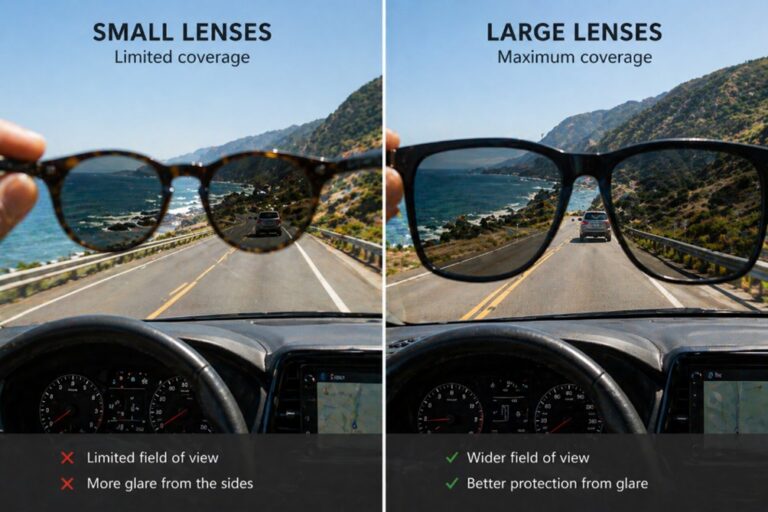
Most people ignore this — but it directly affects visibility.
Small lenses may look minimal,
but they leave your eyes exposed to side light and reflections.
– For driving, lens coverage is critical.
Recommended lens dimensions:
- Lens width: 50–58 mm → balanced visibility
- Lens height: 40–50 mm → better vertical coverage
- Bridge width: 18–22 mm → stable fit
- Temple length: 135–145 mm → secure positioning
– Larger lenses =
- less peripheral light
- fewer reflections entering from the sides
- more consistent visual comfort
– This is why slightly oversized or well-proportioned frames perform better for driving.
Best Lens Colors for Driving
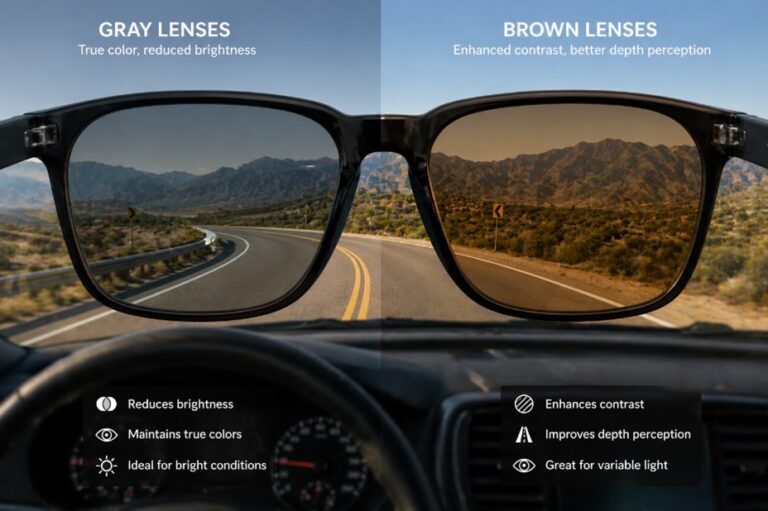
Lens color directly affects driving performance.
Gray lenses → Best overall
- Reduce brightness evenly
- Keep colors natural
- Ideal for everyday driving
Brown lenses → Best for contrast
- Improve depth perception
- Help in changing light
- Excellent for long drives
Green lenses → Balanced option
- Reduce glare
- Maintain natural tones
– If you’re choosing your first pair, start with gray or brown.
– Need help choosing? Read how to choose the best luxury sunglasses
Why Glare Is Dangerous While Driving
Glare is not just annoying.
It:
- reduces visibility
- hides details
- slows reaction time
– Learn exactly how glare affects your vision in this guide on glare reduction.
How to Test Sunglasses for Driving
Before you buy, test them.
Quick Test
- Look at a road or reflective surface
- Put on the sunglasses
- Move your head slightly
– You should see:
- less reflection
- clearer details
- more contrast
Real-Life Test
Wear them in bright sunlight.
Ask:
- Do your eyes relax?
- Can you see clearly without effort?
- Does the light feel controlled?
– If not, they’re not suitable for driving.
Why Lens Quality Makes the Real Difference
Two sunglasses can look identical.
But the experience is completely different.
– That difference is in the lens.
Premium lenses:
- reduce glare more effectively
- keep vision stable
- reduce eye fatigue
This is where lenses like ZEISS stand out.
The Difference You Feel on the Road
With standard sunglasses:
- vision feels darker
- reflections remain
- your eyes keep adjusting
With high-quality lenses:
- vision feels clear
- contrast improves
- your eyes relax
You don’t fight the light anymore.
When You Need Driving Sunglasses Most
You’ll notice the biggest difference when:
- driving at midday
- driving near water
- driving in the city (glass reflections)
- long-distance driving
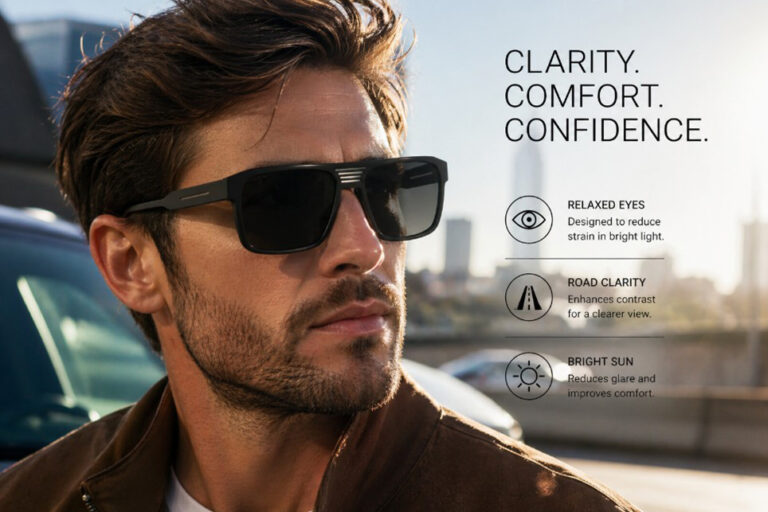
Explore sunglasses designed for clarity and driving comfort in our sunglasses collection.
Final Thought
Driving is about reaction.
And reaction depends on clarity.
The right sunglasses don’t just protect your eyes. They improve how you see the road.
FAQs
What are the best sunglasses for driving?
Sunglasses that reduce glare, improve contrast, and provide full lens coverage are best for driving.
Does lens size matter for driving sunglasses?
Yes. Larger lenses provide better coverage and reduce peripheral light, improving visibility and comfort.
Which lens color is best for driving?
Gray lenses for natural vision and brown lenses for contrast are the best choices.
Why do my eyes feel tired when driving with sunglasses?
Because many sunglasses don’t properly reduce glare or block side light, causing eye strain.